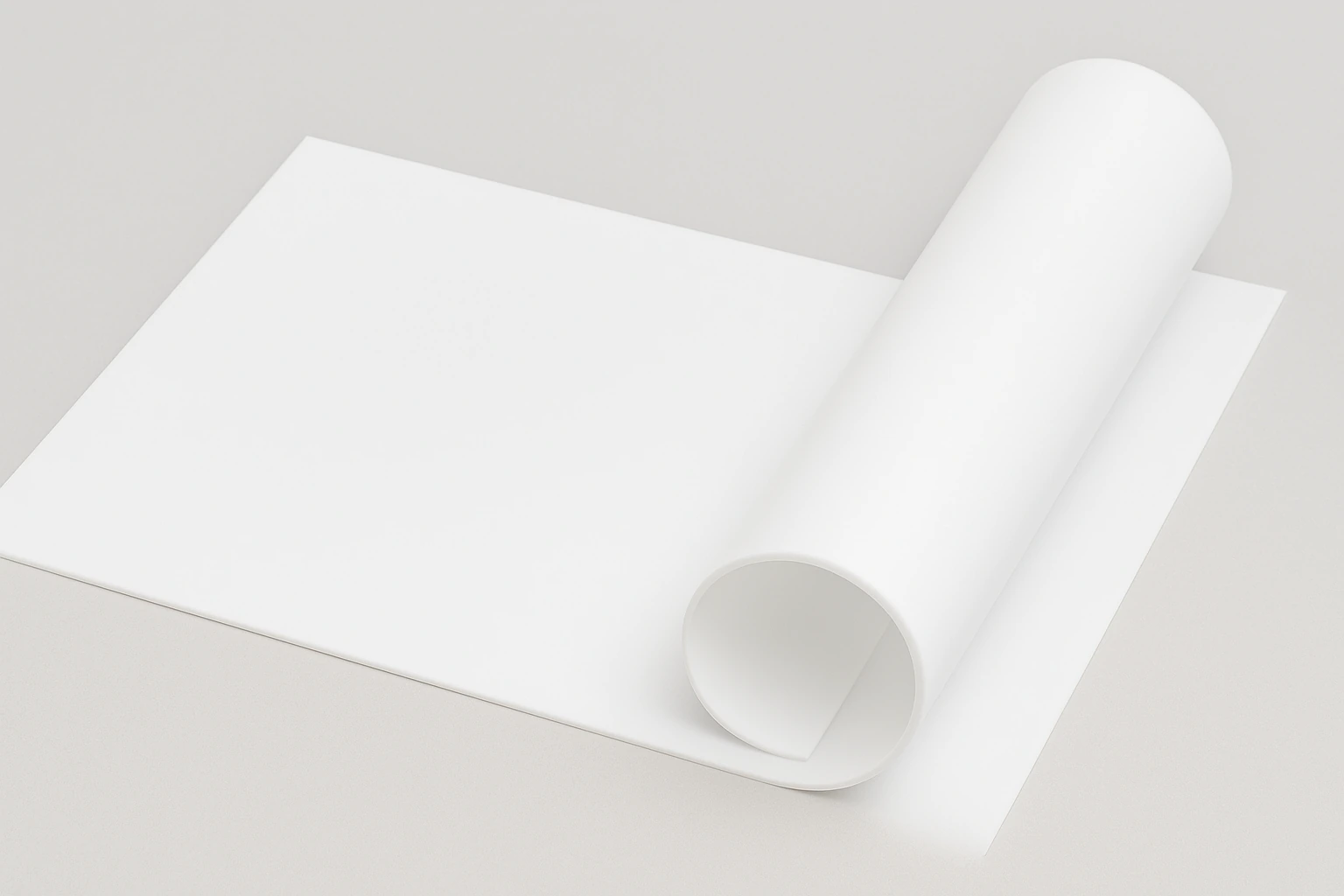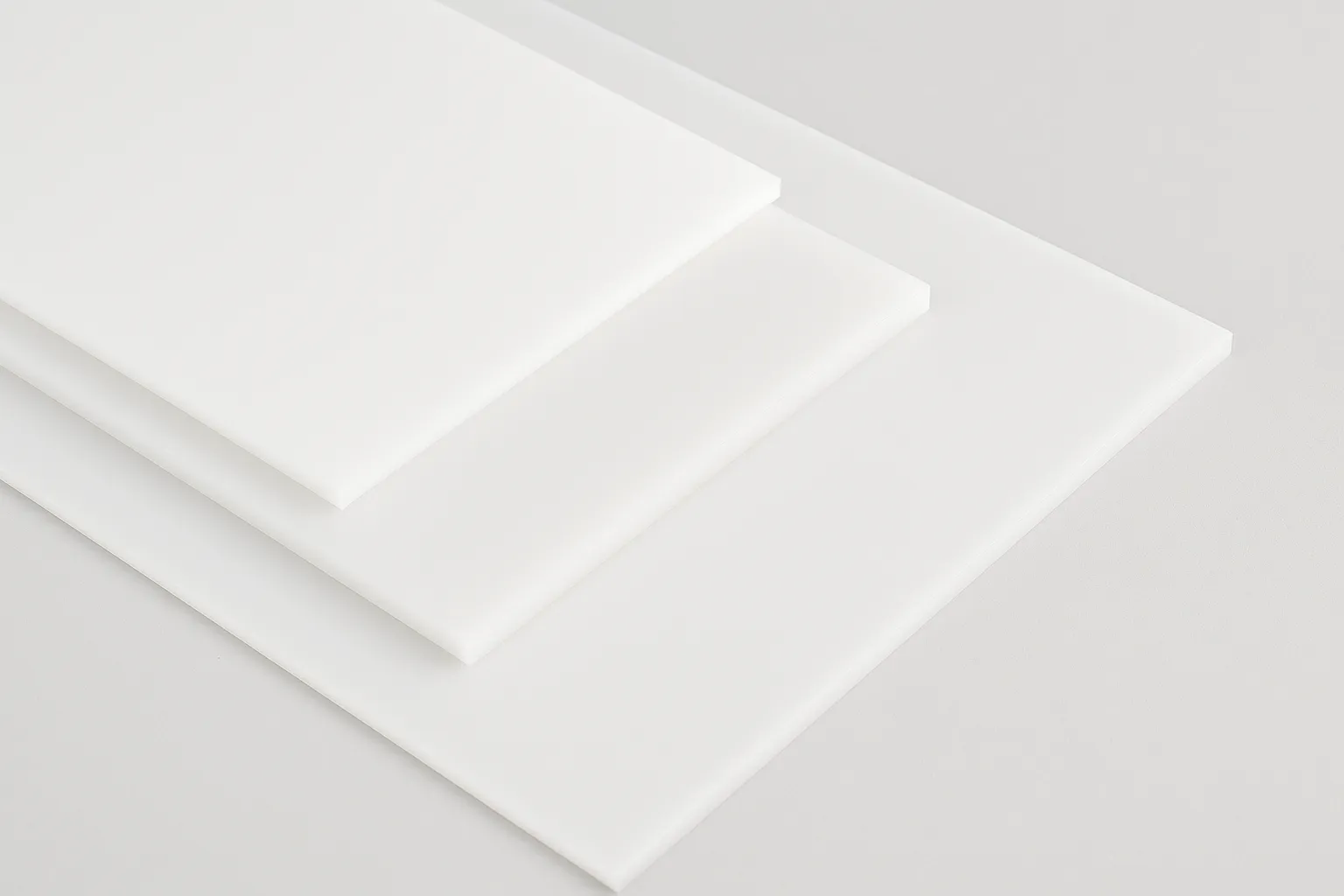
XIFLON PTFE EXPANDED SHEETS are made by stretching and expanding virgin PTFE to build a micro‑porous structure. The material is highly conformable, maintaining PTFE’s chemical inertness and thermal stability while delivering excellent gasket sealing.
Inert from pH 0–14; suitable for aggressive media.
Operating range −160 °C to +200 °C; vacuum to 200 bar.
High recovery, controlled compressibility, low cold flow.
Adapts to flange irregularities to maintain leak‑tightness.
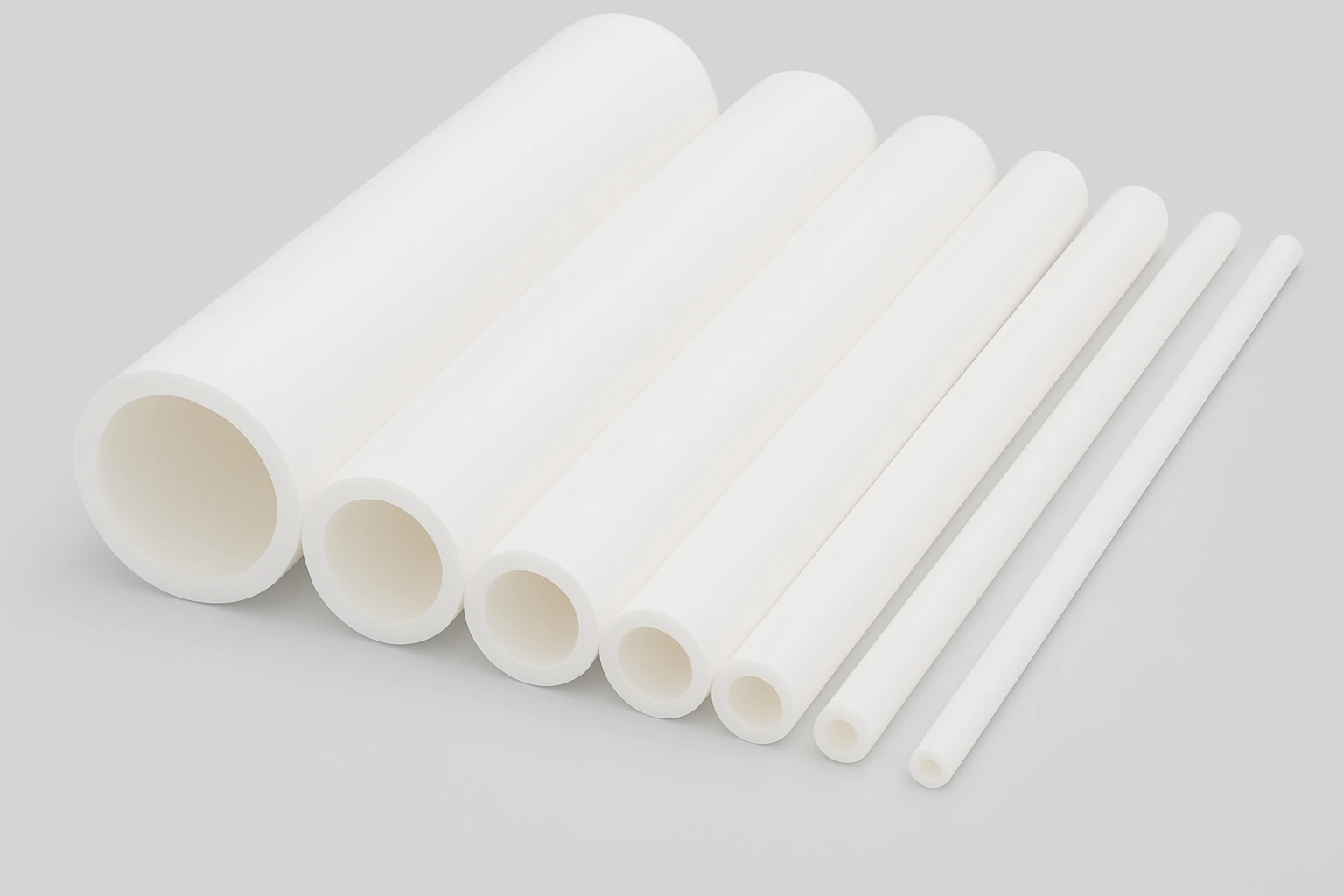
Precision extruded PTFE rods for reliable machining and long‑term stability in harsh media.
Contact UsExpanded PTFE is produced using specialized extrusion and expansion that creates a micro‑porous matrix with enhanced flexibility and tensile strength while maintaining PTFE’s inertness.
Conforms to flange surface irregularities.
Non‑stick, clean installation.
Resists creep & cold flow.
ASTM‑referenced testing.
| Property | Standard | Unit | Value |
|---|---|---|---|
| Density | ASTM D792 | g/cm³ | 0.6 – 0.9 |
| Tensile Strength at Break | ASTM D638 | MPa | ≥ 15 |
| Elongation at Break | ASTM D638 | % | ≥ 80 |
| Compressibility | ASTM F36 | % | ≤ 60 |
| Recovery | ASTM F36 | % | ≥ 6 |
| Thickness, mm | Width x Length, mm |
|---|---|
| 0.5, 1.0 | 1500 x 1500 |
| 1.5 – 12.0 |
1500 x 1500, 1500 x 3000, 1500 x 4500, 1500 x 6000 2500 x 5000 |
are available upon request to meet specific application specifications. Length is supplied according to customer requirements.
Expanded PTFE provides reliable, conformable sealing where dimensional fit and chemical inertness are critical.

Applications: Gaskets & seals for flanges, pipelines, pumps, heat exchangers.

Applications: Leak‑proof sealing under wide pressure/temperature swings.
Applications: Conformable & inert materials for hygienic processes.

Applications: Static sealing where chemical resistance is critical.
Applications: Low‑particle sealing for cleanroom equipment.
Applications: Cut gaskets and special profiles per drawing.
Xiflon PFA SHEETS are engineered to meet stringent global safety, environmental, and industry-specific standards. Our materials are tested and certified to ensure suitability across critical sectors, including chemical processing, automotive and other industry sectors.
Compliance certificates for specific applications can be provided on request.




Conformable micro-porous PTFE with durable recovery.
Suitable across pH 0–14 (except molten alkali metals/elemental fluorine).
−160 °C to +200 °C; vacuum to 200 bar.
Gasket selection and torque guidance on request.
Multiple sheet sizes and thicknesses available.
Access our comprehensive PTFE size range guide and technical documentation.
Download GuidePTFE sheets (Polytetrafluoroethylene), also known by the trade name Teflon®, are semi-finished fluoropolymer products known for their exceptional chemical resistance, low friction, and high-temperature stability.
Unique properties of PTFE sheets:
In short: PTFE sheets are the gold standard for chemical resistance, non-stick performance, and high-temperature use.
PTFE sheets are manufactured by skiving, molding, or extrusion, offering a wide selection of thicknesses and formats.
Thickness range:
Sheet sizes:
Surface finishes:
PTFE sheets can be supplied in ultra-thin films, standard stock, or thick plates — depending on your application.
PTFE sheets are widely used across industries thanks to their non-stick, chemical-resistant, and insulating properties.
Key industries & applications:
From chemical tanks to food plants, PTFE sheets are used wherever extreme resistance and non-stick properties are required.
PTFE is one of the most chemically inert and thermally stable plastics available.
Temperature performance:
Wear & friction:
Chemical resistance:
If you need a plastic that resists nearly everything and performs from cryogenic to high-heat conditions, PTFE sheets are unmatched.
While all are fluoropolymers, PTFE is the benchmark for chemical resistance and temperature stability.
PTFE vs. PFA sheets:
PTFE vs. FEP sheets:
PTFE vs. PVDF sheets:
Summary guide:
PTFE sheets are highly machinable, though they are not melt-processable like PFA or FEP.
Machining:
Fabrication:
Modified PTFE options:
PTFE sheets are best suited for machining into precision parts, sealing components, and non-stick linings