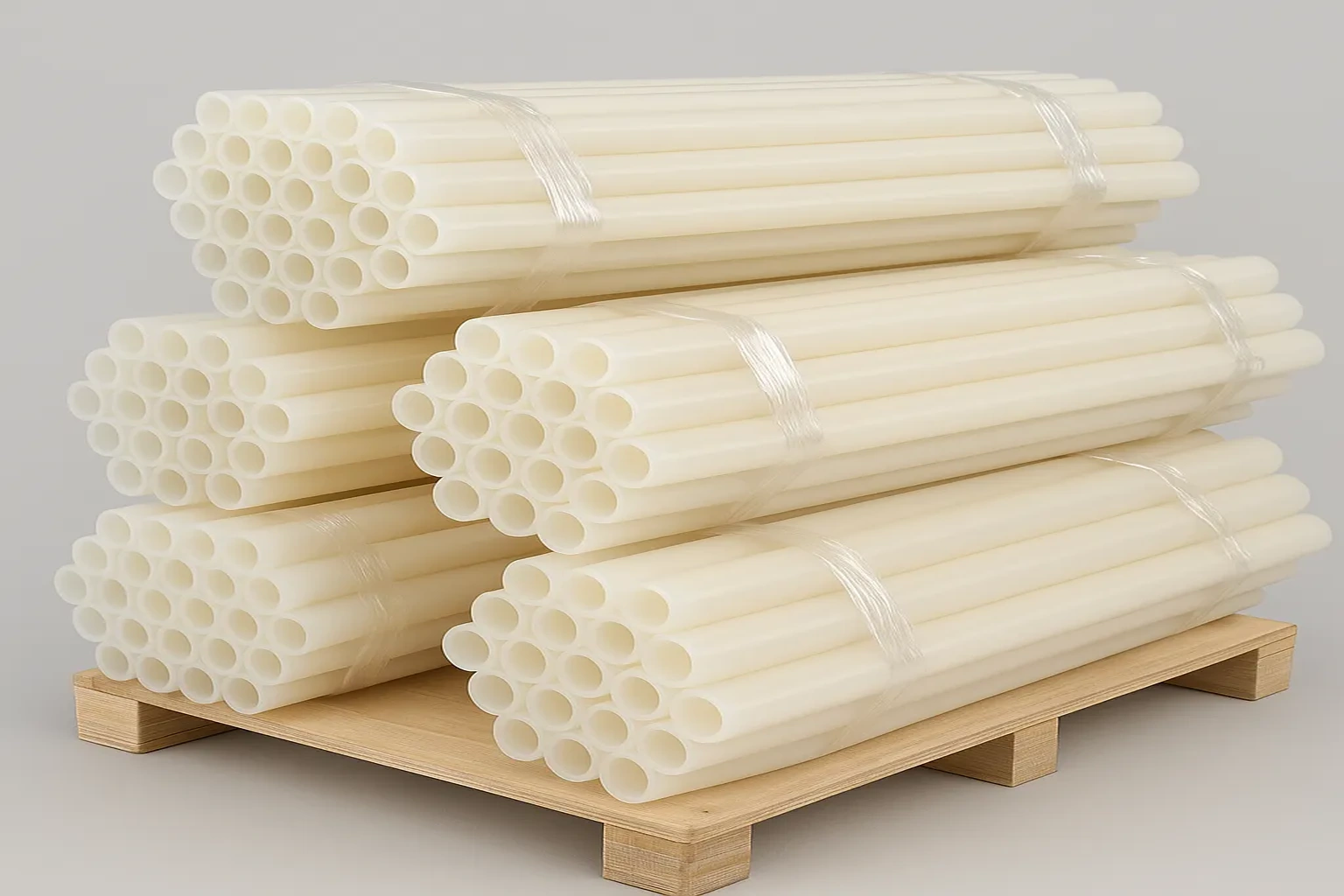
XIFLON PVDF TUBES are semi-finished products manufactured from high-performance polyvinylidene fluoride (PVDF) homopolymer resin, sourced from carefully selected and trusted suppliers including XIFLON fluoropolymer resin.
Excellent resistance to acids, bases, and solvents; stable in harsh chemical environments.
Service temperature from −40 °C to +120 °C; melting point 170±10 °C ensures reliability.
Tensile strength ≥ 35 MPa, elongation ≥ 10 %, and hardness ≥ 70 Shore D for durability.
High dielectric performance with smooth, inclusion-free, contamination-free surfaces.
Our PVDF tubes are extruded from high-purity PVDF homopolymer resin under strict quality control.
This ensures smooth, contaminant-free surfaces, stable round dimensions, and consistent chemical, thermal, and electrical performance across fluid-handling and insulation applications.
Accurate OD/ID and wall thickness with tight tolerances and reliable machinability.
Smooth, clean tube surfaces free from inclusions or metal particles.
Tensile ≥ 35 MPa, elongation ≥ 10 %, hardness ≥ 70 Shore D ensure durability.
Validated to ASTM methods with traceable test data for consistent performance.
| Properties | Value | Unit | Method |
|---|---|---|---|
| Specific gravity | 1.75–1.79 | – | ASTM D792 |
| Tensile Strength at Break | ≥ 35 | MPa | ASTM D638 |
| Elongation at Break | ≥ 10 | % | ASTM D638 |
| Hardness | ≥ 70 | Shore D | ASTM D2240 |
| Melting Point | 170±10 | °C | ASTM D3418 |
| Limiting Oxygen Index | > 44 | % | ASTM D2863 |
| Nominal OD, mm | Wall Thickness, mm | OD Tolerance, mm | Wall Tolerance, mm |
|---|---|---|---|
| 4 | 1.0 | ±0.10 | ±0.10 |
| 5 | 1.0 | ||
| 6 | 1.0 | ||
| 8 | 1.5 | ||
| 16 | 1.9 | ±0.30 | ±0.40 |
| 20 | 1.9 | ||
| 25 | 1.9 | ||
| 32 | 2.4 | ±0.50 | |
| 40 | 2.4 |
are available upon request to meet specific application specifications. Length is supplied according to customer requirements.
This controlled extrusion process delivers high-performance PVDF TUBES with smooth, defect-free surfaces and accurate OD/ID. With excellent chemical resistance, strong mechanical integrity, and stable dielectric behavior, XIFLON PVDF tubes provide dependable performance in fluid-handling and demanding applications.

Applications: Seals, gaskets, and valve parts for pumps and process equipment

Applications: Seals, gaskets, and valve parts for pumps and process equipment

Applications: Insulators, spacers, and dielectric components

Applications: Bushings, bearings, and custom machined parts resistant to corrosive media

Applications: High-purity precision components with smooth finishes
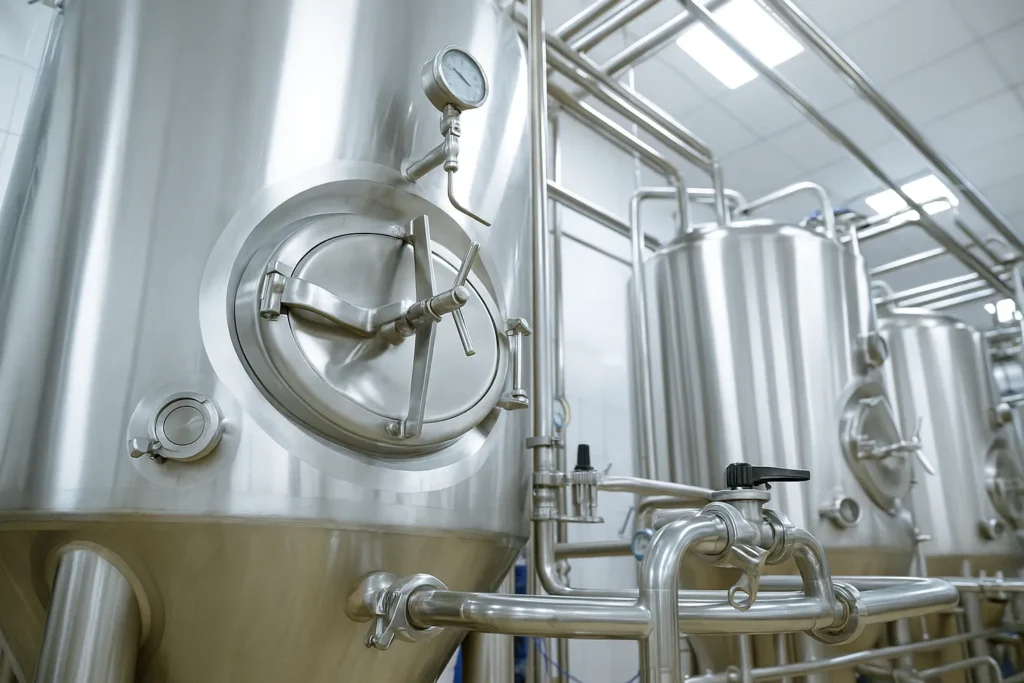
Applications: Hygienic seals, fittings, and machined parts for tanks and processing equipment
Xiflon PVDF TUBES are engineered to meet stringent global safety, environmental, and industry-specific standards. Our materials are tested and certified to ensure suitability across critical sectors, including chemical processing, automotive and other industry sectors.





Nominal OD 4–40 mm with typical walls 1.0–2.4 mm; standard length 50 m. Length tolerance 0 / +3 %.
Smooth, defect-free tube surfaces free of inclusions or metal particles, extruded under strict quality control.
Service range −40 °C to +120 °C; melting point 170 ± 10 °C; reliable chemical, UV and dielectric behavior.
Ideal for fluid handling, electrical insulation and semiconductor uses in demanding environments.
OD: 4, 5, 6, 8, 16, 20, 25, 32, 40 mm • Typical wall: 1.0–2.4 mm (per OD) • Standard length: 50 m.
OD tolerance ±0.10–±0.50 mm; wall tolerance ±0.10–±0.40 mm; length tolerance 0 / +3 %.
Specific gravity 1.75–1.79; tensile ≥ 35 MPa; elongation ≥ 10 %; hardness ≥ 70 Shore D; LOI > 44 % (ASTM).
Store clean, dry, cool; avoid sunlight, heat, and oxidizing agents.
Access our PVDF tube dimensions and technical documentation.
Download PVDF Tubes TDSPTFE rods (Polytetrafluoroethylene rods, also known as Teflon® rods) are semi-finished fluoropolymer products known for their outstanding chemical resistance, low friction, and wide temperature range.
Unique properties of PTFE rods:
In short: PTFE rods are the go-to choice for seals, insulators, and non-stick components in extreme environments.
PTFE rods are made using compression molding or ram extrusion, since PTFE is not melt-processable like FEP or PFA.
Manufacturing methods:
Formats available:
The choice of manufacturing method depends on diameter, length, and end-use requirements.
PTFE rods are available in a wide range of diameters and lengths.
Ram-extruded PTFE rods:
Molded PTFE rods:
Custom options:
From micro-diameter insulation rods to heavy billets for machining, PTFE rods cover the full spectrum.
PTFE rods are used wherever chemical resistance, insulation, and non-stick properties are required.
Industries & applications:
PTFE rods are valued across industries as reliable stock for precision machining into durable components.
PTFE vs. PFA rods:
PTFE vs. FEP rods:
PTFE vs. PEEK rods:
Summary guide:
PTFE rods are one of the best all-round performers among engineering plastics.
Temperature resistance:
Wear & mechanical strength:
Chemical resistance:
PTFE rods excel in heat and chemicals, but for load-bearing parts, filled grades are often recommended.
Yes — PTFE rods are one of the most common plastics used as machining stock.
Machining properties:
Fabrication options:
Common machined parts:
PTFE rods are among the easiest engineering plastics to machine into high-performance sealing and insulating components.