
Precision Manufacturing
via extrusion, injection molding, and blow molding
Fluorinated Ethylene Propylene (FEP) is a high-performance
melt-processable fluoropolymer known for its outstanding dielectric properties, chemical resistance, and thermal stability.
Resistant to aggressive chemicals and solvents
Continuous service temperature: 200 to +260°C
Low dissipation factor and high dielectric strength
Easily extrudable, suitable for complex profiles and thin-wall insulation
| Property | Standard | Unit | XF6102 | XF6104 | XF6108 | XF6112 | XF6118 | XF6124 | XF6130 | XF6136 |
|---|---|---|---|---|---|---|---|---|---|---|
| MFR | ASTM D2116 | g/10 min | 0.8-2.0 | 2.1-4.0 | 4.1-8.0 | 8.1-12.0 | 12.1-18.0 | 18.1-24.0 | 24.1-30.0 | 31.0-36.0 |
| Tensile Strength | ASTM D638 | MPa | 28 | 25 | 22 | 21 | 20 | 19 | 18 | 18 |
| Elongation | ASTM D638 | % | 320 | 310 | 300 | 295 | 290 | 280 | 270 | 260 |
| Specific Gravity | ASTM D792 | - | 2.12-2.17 | |||||||
| Dielectric Constant, 1 MHz | ASTM D150 | - | ≤ 2.15 | |||||||
| Dissipation Factor, 1 MHz | ASTM D150 | - | ≤ 0.0007 | |||||||
| Melting Point | ASTM D3418 | °C | 265±10 | |||||||
| Limiting Oxygen Index | ASTM D2863 | % | > 95 | |||||||
| Flammability | UL94 | - | V-0 | |||||||
| Grade | MFR, g/10 min | Viscosity | Method |
|---|---|---|---|
| XF4604 | 2.0–4.0 | high viscosity | molding and extrusion |
| XF4608 | 4.1–8.0 | medium viscosity | molding and extrusion |
| XF4612 | 8.1–12.0 | medium low-viscosity | molding and extrusion |
| XF4618 | 12.1–18.0 | low-viscosity | injection molding and extrusion |
| XF4624 | 18.1–24.0 | ||
| XF4630 | 24.1–30.0 | ultra-low viscosity | extrusion |
| XF4636 | 30.1–36.0 |
Unlike PTFE, FEP is melt-processable, enabling high-precision manufacturing of complex shapes, seamless tubing, and transparent components with exceptional surface finish, while retaining outstanding chemical resistance and non-stick properties.
via extrusion, injection molding, and blow molding
for seamless joints in fluid handling systems
in complex geometries
due to easier thermal processing
Select from our range of grades with varying Melt Flow Rates (MFR), tailored to specific processing needs.
MFR (g/10 min) is inversely related to melt viscosity and determines the polymer’s flow behavior during melt processing such as extrusion or molding.
Ideal for: Extrusion and molding of products with thick walls
Ideal for: injection molding, fast-processing techniques
Note: MFR is not a direct measurement of viscosity but a standard flow index obtained under specific conditions (ISO 1133 or ASTM D1238).
FEP (Fluorinated Ethylene Propylene) offers an excellent balance of chemical resistance and thermal processability, making it highly valuable for efficient manufacturing across multiple sectors.
Unlike PTFE, FEP can be processed via extrusion, injection molding, compression molding, and film blowing, allowing high-volume production of complex profiles with tight tolerances, uniform wall thickness, and smooth surface finishes.
Its consistent melt flow makes FEP ideal for high-speed extrusion of thin-wall insulation used in telecommunications, aerospace, and automotive wiring systems. The resin enables precise dimensional control in complex cable constructions, minimizing rework and material waste. FEP’s outstanding dielectric strength and thermal resistance support long-term performance in wires, coaxial cables, USB data lines, and EV power systems. It is also widely used in fluid transfer tubing, chemical containment linings, and valve and pump components, where chemical inertness and non-stick surfaces are critical. In harsh industrial environments, FEP provides reliable insulation, abrasion resistance, and weatherability, making it a preferred material for sensor cables, control wiring, and chemical process equipment.
Choosing FEP means gaining processing efficiency, cost-effective throughput, and reliable performance in wire & cable, automotive, and other industrial applications.
Tailored for Chemical, Medical, and Electronics Sectors

Applications:: Tubing, pump and valve linings, seals, gaskets, chemical tank linings

Applications: Cable jacketing for submersible pumps, fuel tubing, seals, gaskets

Applications: Wire insulation, fluid transport tubing, cable jacketing, fuel system components

Applications: Applications: Wire and cable insulation, fuel and brake tubing, sensor protection, connector seals

Applications: Tubing, chemical-resistant linings, wire and cable insulation, dielectric films,
component encapsulation
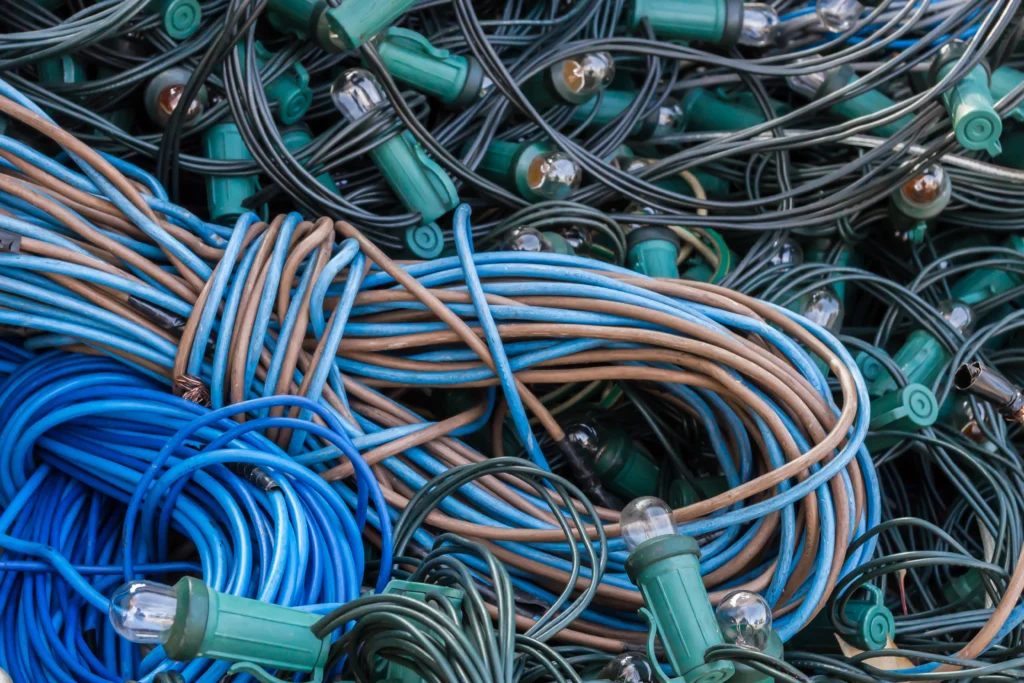
Applications: Thin-wall insulation, high-frequency cable jacketing, data and control wiring
Xiflon FEP resins are engineered to meet stringent global safety, environmental, and industry-specific standards. Our materials are tested and certified to ensure suitability across critical sectors, including chemical processing, automotive and other industry sectors.





Wide range of resins with different MFR, available in powder and pellet forms.
Prime-grade FEP ensures consistent melt flow, excellent purity, and reliable performance.
Proven mechanical strength and chemical resistance in demanding applications.
Multilingual technical support from selection to end-use applications.
Trusted across semiconductor, chemical, cable, and aerospace sectors.
Access our comprehensive FEP grade range guide and technical documentation.
Download GuideFEP (Fluorinated Ethylene Propylene) is a melt-processable fluoropolymer known for its chemical resistance, non-stick surface, and excellent electrical insulation. Like PTFE and PFA, it is fully fluorinated and chemically inert, but differs in key ways:
FEP is often selected when chemical resistance, processability, and transparency are required at moderate service temperatures.
FEP is used in a broad range of industries thanks to its chemical inertness, dielectric strength, and thermal stability:
FEP’s melt processability and clarity make it ideal for complex shapes, thin-wall parts, and visual inspection lines.
FEP maintains outstanding resistance to nearly all chemicals, including acids, bases, and solvents. Key properties include:
These properties, combined with ease of processing, make FEP suitable for high-performance applications where purity and chemical durability are essential.
FEP delivers reliable electrical insulation across a wide temperature and frequency range:
Additionally, FEP’s processability into thin-wall insulation enables compact, lightweight cable designs in aerospace, telecommunications, and medical sectors.
Yes. As a melt-processable fluoropolymer, FEP supports several thermal processing techniques: